
Profile
Adam Slucki
I lead an AI team and build machine learning systems end to end, from computer vision on industrial hardware to agentic applications built on large language and multimodal foundation models.
- Role
- Head of AI
- Experience
- 14 years
- Based in
- Warsaw, Poland
- Languages
- Polish, English, Japanese
About
I am Head of AI with 14 years of professional experience in software and machine learning. I lead an AI team, set technical direction, and stay hands-on: I design architectures, write production code, and work directly with clients from discovery through deployment.
Most recently my work has centred on agentic systems and applications of foundation models: multi-step agents with tool use, retrieval-augmented generation, multimodal understanding and image generation, together with the evaluation needed to trust them.
My longer background is in computer vision and deep learning, delivered in demanding real-world settings: industrial inspection, image enhancement, segmentation, object and product recognition, 3D and point-cloud processing, and on-device inference on dedicated hardware.
Expertise
- Agentic systems and LLM applications
- Multi-step agents with tool use and orchestration (including hub-and-spoke designs and MCP), retrieval-augmented generation with graph-based retrieval, conversational systems, and automated evaluation of retrieval and model output.
- Foundation models
- Building products on large language, vision-language and image-generation models: multimodal understanding, generation pipelines and model-agnostic integration.
- Computer vision and deep learning
- Classification, segmentation, detection, image enhancement and industrial inspection, combining learned models with classical vision, 3D geometry and point clouds.
- Architecture and delivery
- End-to-end ML solutions spanning hardware selection, data and annotation, modelling, evaluation, deployment (including edge and on-device inference) and post-deployment improvement.
- Leadership
- Leading an AI team and client projects as technical lead: mentoring engineers, staffing and budgeting, requirements discovery and technical negotiation with stakeholders.
Selected work
Client delivery · retail
Agentic conversational commerce
An agentic assistant that replaced static questionnaires with a conversation. I built its multimodal capabilities end to end: understanding customer-provided images, generating images, and semantic retrieval over the product inventory, exposed as tools to the agent and integrated with the application built by the backend team.
The work combined LLM agents and orchestration, vector search and image-generation models, with evaluation of both visual and textual output.
Outcome The solution was taken to production.
Client delivery · retail
Fresh produce recognition at the point of sale
A computer vision system that recognises fresh produce at the checkout and integrates the result with the store’s point-of-sale system. I was responsible for the vision side end to end: choosing the camera hardware, building the recognition model and developing the inference application connected to the POS.
Outcome Deployed in a real store.
Client delivery · food manufacturing
Industrial visual quality inspection
Technical lead and main technical contact for an inspection system for products on a production line. The system combines sequenced lighting control, segmentation, object cutout and 3D projection on GPU edge hardware integrated with industrial I/O.
Beyond the architecture, I built the annotation tooling, ran annotation together with the client’s quality inspectors, owned evaluation, mentored the engineer developing the segmentation models and coordinated integration with the client’s IT.
Outcome Deployed as a pilot in a factory.
Internal R&D
Multi-agent knowledge system for incident analysis
A research platform for answering analytical questions over a public corpus of workplace incident reports. It uses advanced document processing and indexing, graph-based retrieval, MCP tools and hub-and-spoke orchestration of specialised agents, with automated evaluation of retrieval quality.
Outcome Used internally to develop and test agent and retrieval patterns.
Open source · main contributor
WildNLP: robustness testing for NLP models
A Python library that corrupts input text in controlled, composable ways (misspellings, keyboard typos, OCR-style character errors, punctuation and formatting changes, and more) to measure how NLP models behave on noisy, real-world input, with ready-made pipelines for standard benchmark datasets.
Outcome Published on PyPI as wild-nlp.
Applied research · social media analytics
Predicting audience retention in social media video
A model that scores every fragment of a video by its predicted drop in viewer retention, so creators can find the shots likely to lose their audience before publishing. It learns from aggregated player interaction data, with drops normalised into percentiles so that videos of different lengths can be compared.
The model reads the video as a sequence, combining the frames with the text overlaid on them, extracted with a pipeline I published at ICCVG 2018. Instead of relying on error metrics alone, we validated it against what stakeholders care about: views.
Outcome Videos the model rated as engaging had markedly more organic views than those it rated poorly.
Client delivery · several projects
Computer vision across industries
Long-term hands-on and technical-lead work on image enhancement, product recognition and industrial inspection, combining deep learning with classical vision, 3D and point-cloud processing, and deploying models on device with TensorRT, on mobile and on proprietary hardware.
Talks and panels
AI Summit Poland 2024 · Panel · Warsaw
Kto powinien wdrażać AI? (Who should implement AI?)
Panel discussion on who should drive AI adoption in organisations.
Data Science Summit ML Edition 2024 · Talk · Warsaw
Object tracking with machine learning
with Łukasz Ziobroń
A real-time tracker that pairs a fast optical tracker with learned components to cope with appearance changes and rapid motion, shown in a live demo.
Data Science Summit ML Edition 2022 · Talk · Warsaw and online
Do you have training data?
What to do when a computer vision project starts without data: synthetic video from rigged and animated 3D humans, controllable image edits in a generative model’s latent space, and segmentation trained from bounding-box labels only.
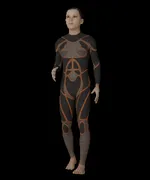
Data Science Warsaw Meetup #47, Warsaw University of Technology · Talk · Warsaw
AI is coming! Emotion analysis of fan reaction videos to Game of Thrones
with Maciej Remiszewski
Recognising viewers’ emotions in videos of fans reacting to the final season of Game of Thrones.
Środowe warsztaty z Data Science, SGH Warsaw School of Economics · Talk · Warsaw
Coming to Senses: Advancements in sensory capabilities of Artificial Intelligence
A look back at IBM Research’s 2012 “5 in 5” predictions about machines that see, hear, touch, taste and smell, and how much of them had come true.
PyData Warsaw 2018 · Talk · Warsaw
It is never too much: training deep learning models with more than one modality
Combining several input modalities when training deep learning models.
Publications
Education and certifications
Education
- MSc in Computer Science
- Doctoral programme coursework completed (PhD paused)
Certifications
- Claude Certified Architect – Foundations
- Japanese Language Proficiency Test, N1
- PyImageSearch Gurus
- SAS Statistical Analyst
Languages
Polish (native) · English (professional) · Japanese (JLPT N1)